
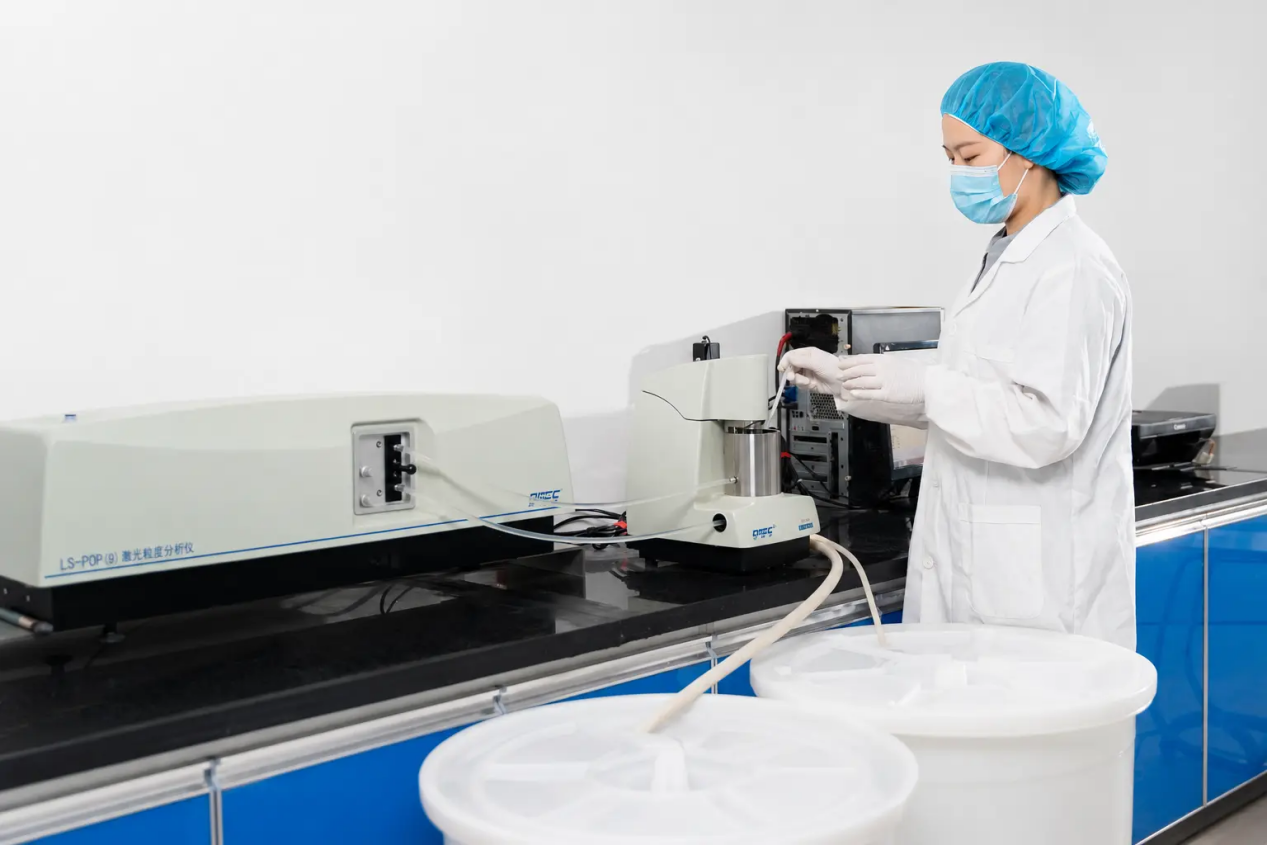
OMEC LS-POP(9) Laser Particle-Size Analyzer
Used to generate particle-size distribution data for identified samples.
Industrial Diamond Quality Control
Quality control is built into the stages that affect the supplied product, from incoming material inspection and process monitoring to finished-product review, batch records, and shipment preparation.

Quality Control Overview
The quality-control process described in the source document covers incoming material review, production-stage monitoring, finished-product inspection, batch record management, and shipment preparation. The applicable checks depend on the product and the requirements defined for the order.
Applicable checks are aligned with the product specification and order requirements.
Production, inspection, batch, and shipment records are maintained as connected information.
Buyers can request confirmation of the documents available for the product under evaluation.
Process Overview
Quality checks are placed at the stages that influence the supplied material. The applicable inspection items depend on the product and order requirements.
Stage 01
Incoming diamond raw materials are sampled before release to production. Supplier quality is also evaluated as part of incoming material management.
Stage 02
Documented production stages for diamond micron powder include crushing, ball milling, classification, and purification. Operators monitor defined process parameters at the applicable stages.
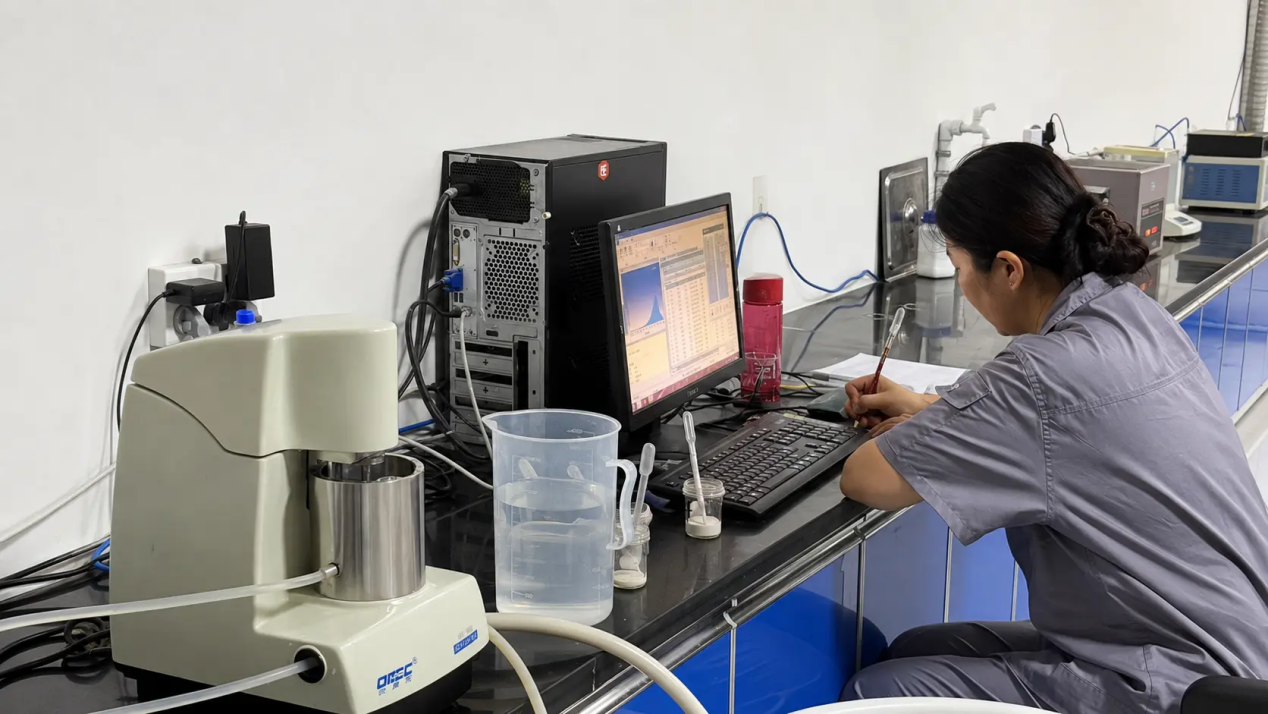
Samples are taken after classification to evaluate particle-size distribution and agglomeration. Material that falls outside the defined requirement is reprocessed and tested again. It is released only after meeting the applicable acceptance criteria.
Stage 03 and 04
Finished-product inspection covers D50 and D90 particle-size distribution, impurity content, powder purity, dispersion, product specification, appearance, packaging integrity, and customer-specific requirements. Conforming product is released for packaging and shipment with the applicable batch test data.
D50 represents the particle size at which 50% of the measured distribution is below that value; D90 represents the size below which 90% of the measured distribution falls.
Crystal form or particle appearance is reviewed during incoming and finished-product control.
Packaging can be customized to meet specific customer requirements.
Testing Equipment and Methods
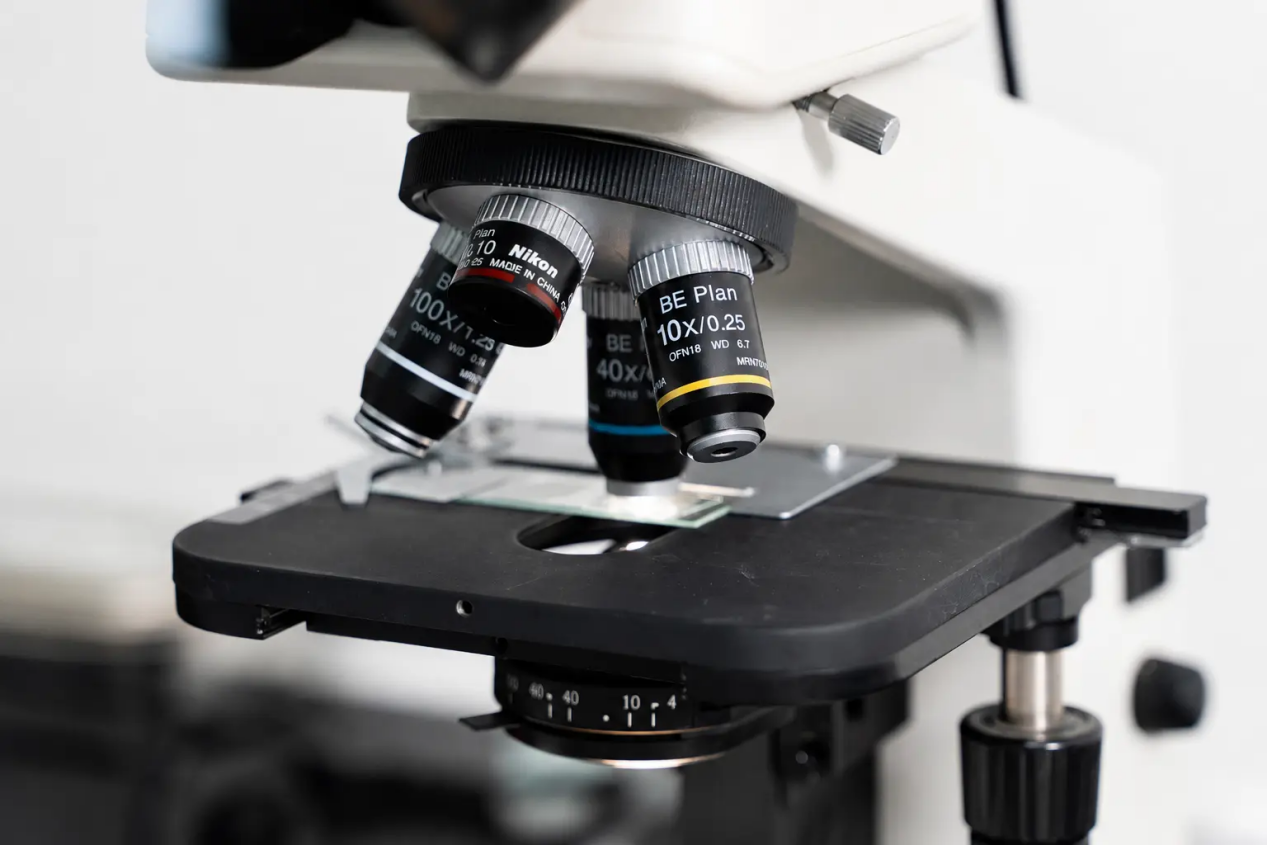
The supplied document shows an OMEC LS-POP(9) laser particle-size analyzer, a Microtrac S3500 particle-size analyzer, and an optical microscope.
Used to generate particle-size distribution data for identified samples.
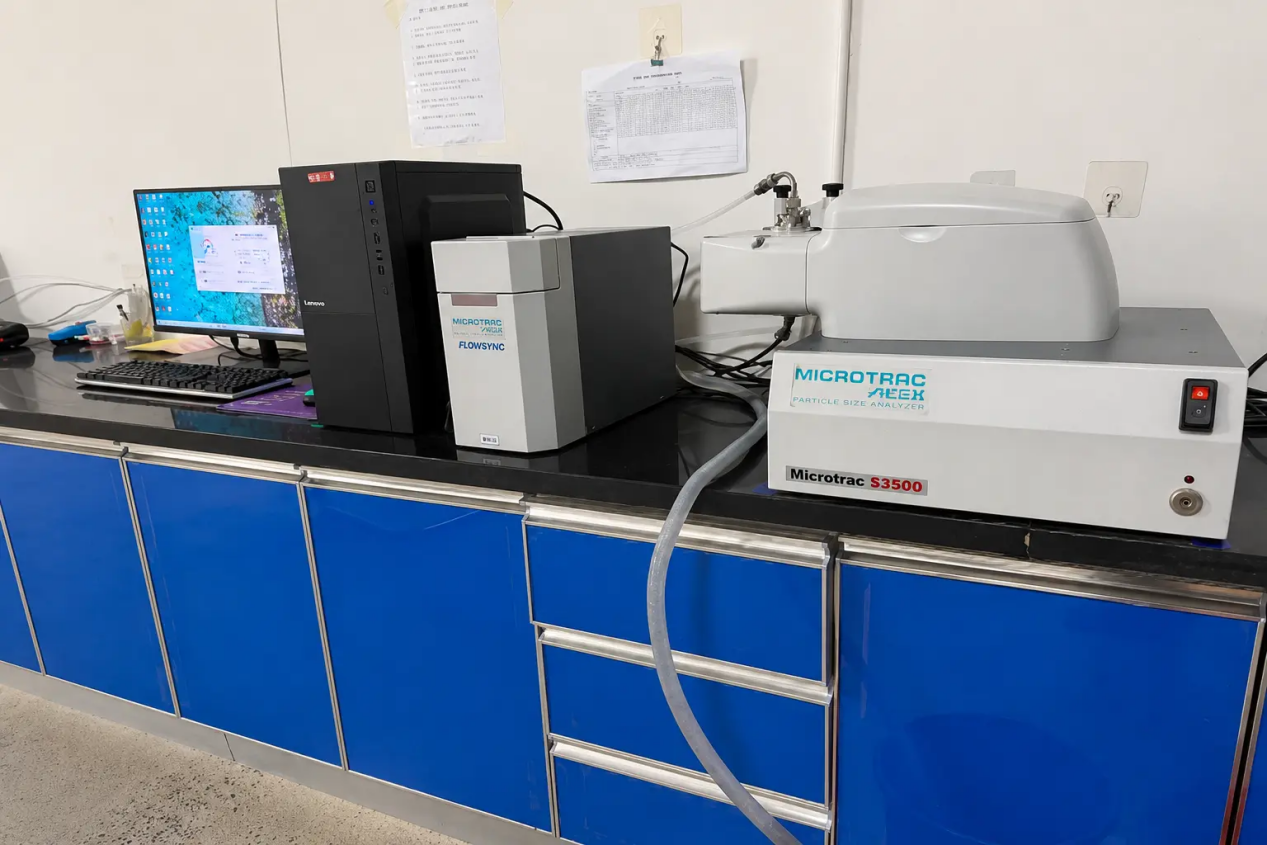
Used to generate particle-size distribution data and report values such as D50 and D90.
Used for visual observation of particle appearance.
Test Report Examples
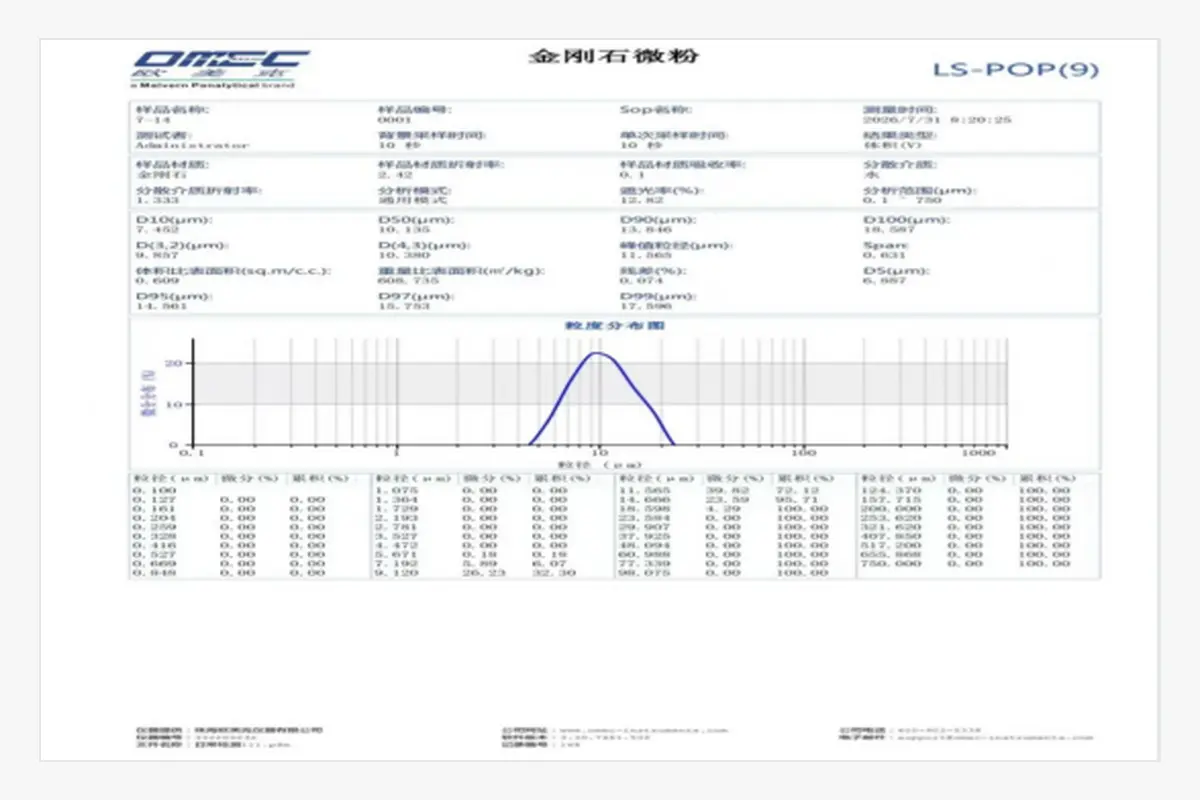
LS-POP(9) particle-size distribution report for an identified diamond powder sample.
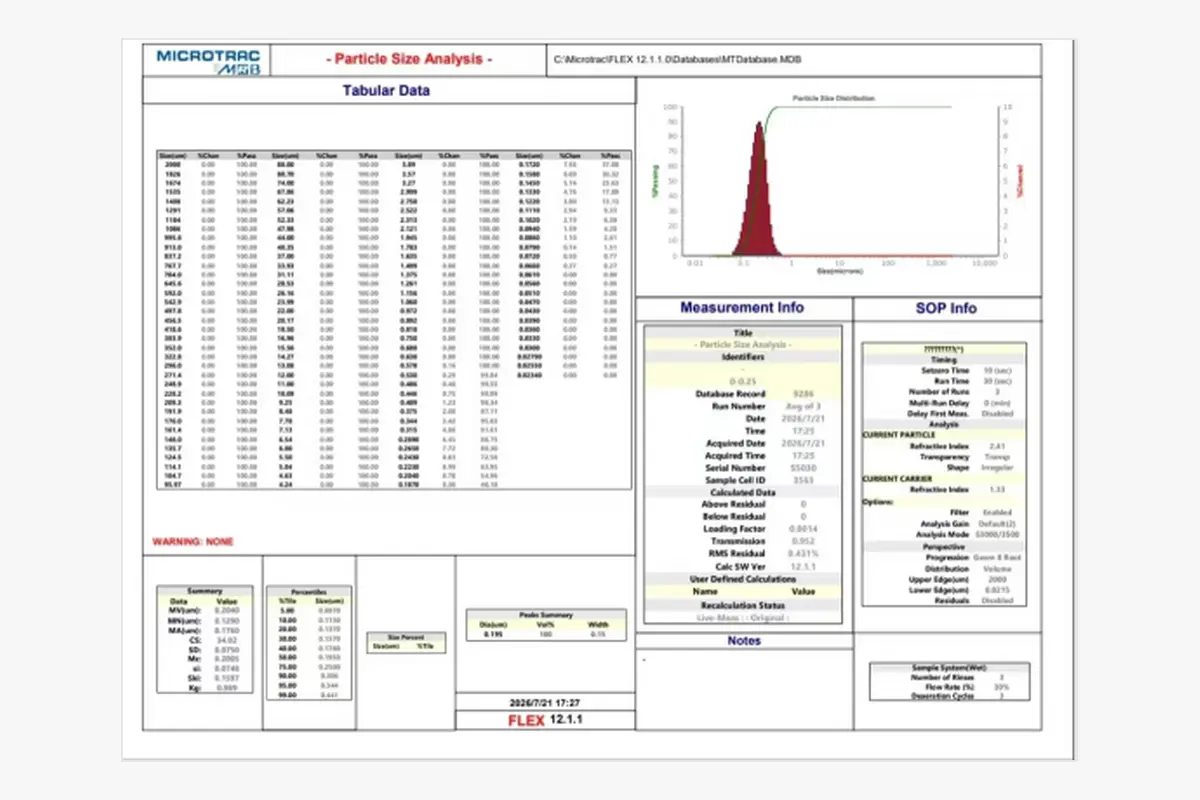
Microtrac particle-size analysis report for an identified diamond powder sample.
Batch Consistency and Traceability
The documented batch record structure connects the raw-material batch, production record, quality test result, batch number, and shipment record. These records support review of the production and inspection information associated with a supplied batch.
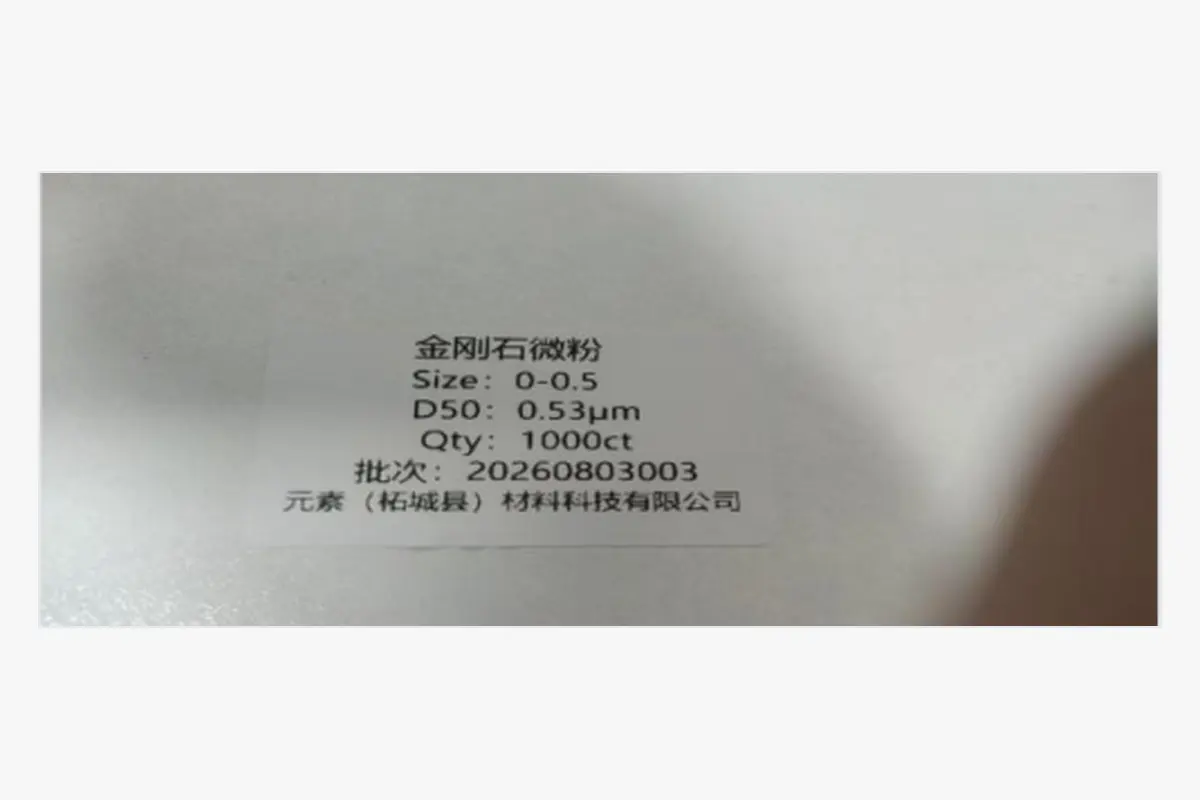
Diamond micron powder batch label showing particle-size and batch-number fields.
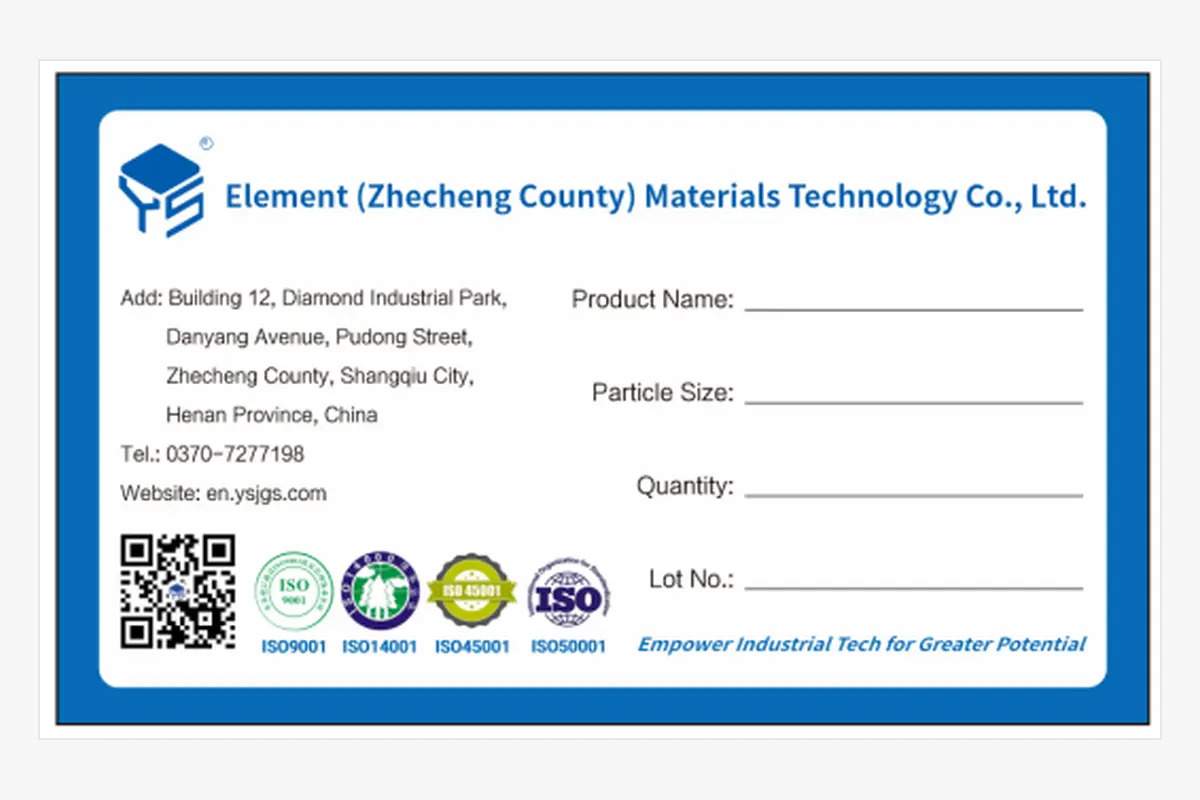
Industrial diamond product package label showing product name, particle size, quantity, and lot number fields.
Stage 05
Packaging is completed according to the order requirements. Before shipment, the documented final review covers packaging integrity, labels, quantity or weight, batch number, and accompanying documents. Packaging and shipment records are maintained with the order history.
Documents
Depending on the product and order requirements, available documents may include a product test report, Technical Data Sheet (TDS), Safety Data Sheet (SDS), and relevant quality certification documents. Document availability should be confirmed for the product under evaluation.
Certifications
Nonconformance and Corrective Action
When a quality issue is identified during production or reported by a customer, the documented process records the product, batch number, issue description, application conditions, and customer feedback.
Nonconforming material is reprocessed where applicable and tested again. It is released only after it meets the applicable requirement. Corrective actions may also address the production process, inspection process, personnel training, or management requirements.
FAQ
Incoming materials are sampled before release. The documented inspection items include crystal form or particle appearance, impurity content, initial particle-size screening, strength, color, appearance, and batch identification.
Process parameters are monitored during crushing, ball milling, classification, and purification. Samples are taken after classification to review particle-size distribution and agglomeration before the material moves to the next stage.
The material is reprocessed and tested again. It is not released to the next production stage until it meets the applicable requirement.
The listed items may include D50 and D90 particle-size distribution, impurity content, powder purity, dispersion, product specification, appearance, packaging integrity, and customer-specific requirements.
Depending on the product and order requirements, available documents may include a product test report, TDS, SDS, and relevant quality certification documents.
The review records the product, batch, issue description, application conditions, and customer feedback. Production records, test data, and raw-material information may then be reviewed to identify the cause and define actions.
Request a Quote
Share your product, particle-size, packaging, and document requirements. Our team will review the information and respond with available quality details and pricing support.
We value your privacy: all personal data you provide will be kept strictly confidential, used only to process your inquiry and offer you the best price, and never shared with third parties without your consent.